From Strategy to Streets: Turning Municipal Housing Policy into Deliverable Outcomes
From Strategy to Streets: Turning Municipal Housing Policy into Deliverable Outcomes
Policy in Practice — A publication by Glean and Thrive Resources (Policy, Strategy & Performance Advisory)
By Foluso Akinsola, PhD | Program, Policy & Strategy Advisor
Principal, Glean and Thrive Resources
Canadian municipalities face a common challenge: translating housing strategies into built units. While funding and policy intent are increasingly aligned, delivery outcomes hinge on approvals, infrastructure sequencing, governance, and performance management. This briefing outlines practical approaches that help cities convert strategy into outcomes—relevant across Canada, with illustrative examples from Surrey and Coquitlam.
The Issue
Municipalities across Canada are managing rapid growth, rising housing demand, and infrastructure pressure at the same time. In many jurisdictions, the binding constraint is less about policy intent and more about delivery systems: approval timelines, cross-department coordination, infrastructure readiness, and accountability for performance.
Evidence Snapshot
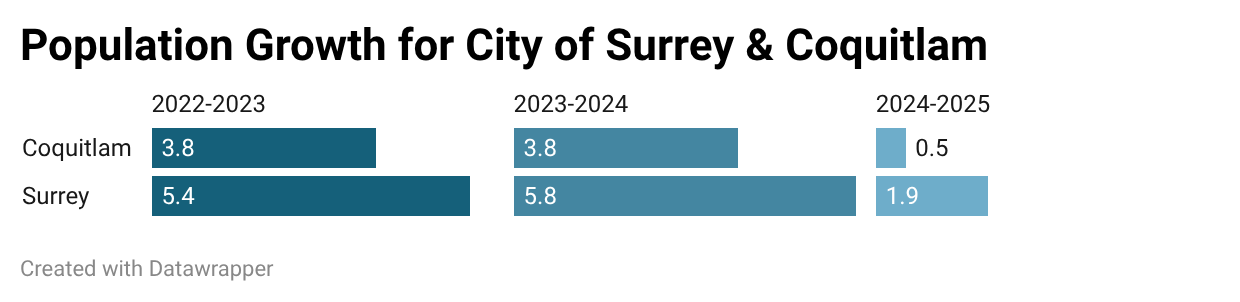
- Population growth is placing sustained demand on municipal services and housing supply (Surrey and Coquitlam provide illustrative examples of high-growth dynamics).
- Canada faces a widely cited housing supply gap over the remainder of the decade, increasing pressure on municipal approvals and enabling infrastructure.
- Housing delivery timelines are often extended by process fragmentation and limited visibility into bottlenecks across approval stages.
Strategic Analysis
What’s working
- Clear growth strategies and increasing regional alignment on housing supply.
- Expanded use of density tools and transit-oriented planning approaches.
- Growing interest in transparent performance reporting and service standards.
What limits outcomes
- Siloed workflows across planning, engineering, finance, and community services.
- Project-by-project decision-making instead of portfolio-level oversight.
- Limited operational metrics that show exactly where and why approvals stall.
- Infrastructure sequencing and capacity constraints not integrated early enough.
Solution Pathways (Practical & Implementable)
1) Establish a Housing Delivery Dashboard
Create a simple dashboard tracking end-to-end timelines and bottlenecks:
- Time-in-stage by approval step
- Number and type of outstanding conditions
- Infrastructure readiness flags (water, sewer, transport, amenities)
Why it works: leadership can intervene early, identify recurring bottlenecks, and prioritize improvements that produce measurable cycle-time reductions.
2) Move from File Review to Portfolio Oversight
Manage housing applications as a portfolio rather than isolated files:
- Group projects by geography/corridor and infrastructure dependency
- Sequence approvals based on enabling capacity and policy priorities
- Identify “high-impact” constraints affecting multiple projects
3) Formalize Cross-Department Delivery Teams
Stand up a recurring delivery forum with clear ownership and escalation rules across departments. This reduces rework, improves decision speed, and strengthens accountability for outcomes.
4) Use Outcome-Driven Metrics (Not Output Metrics)
Shift from “how many applications processed” to metrics that reflect delivery outcomes:
- Median time-to-approval by housing type
- Variance to service standards (targets)
- % of applications meeting defined milestones
5) Pilot Before Scaling
Start with one growth area (e.g., a corridor or centre), implement delivery improvements, measure impact, then scale based on evidence.
Policy Implications
Municipalities improve housing outcomes fastest when they treat delivery systems—governance, performance metrics, and cross-functional execution—as core policy tools. The issue is no longer the absence of strategy; it is whether delivery systems can produce outcomes that are predictable, transparent, and accountable.
Applied Policy Lens
Evidence-based policy creates impact when paired with disciplined delivery: clear accountability, measurable milestones, and decision-making informed by operational data. Strategy sets direction; execution determines results.
References (Indicative)
- Statistics Canada — Census population growth profiles (2016–2021)
- Conference Board of Canada — Housing supply gap analysis (various publications)
- CMHC — Housing supply, approvals, and delivery insights (various publications)
- Municipal development dashboards and service standard reporting (select Canadian cities)
Subscribe: Get monthly, solution-focused policy briefings from Glean and Thrive Resources.
